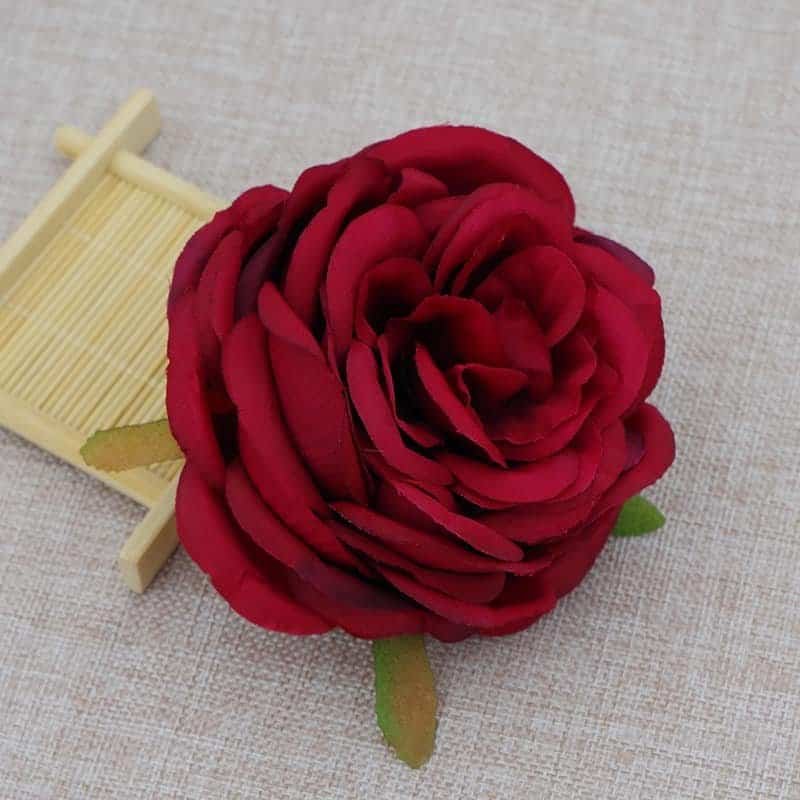
When people ask, “what are artificial roses?” they often picture the stiff, unnatural plastic flowers from decades past. However, modern manufacturing technology has completely transformed this industry. Today, artificial roses are highly engineered botanical replicas designed to meet the rigorous demands of commercial spaces, high-end events, and global supply chains.
For wholesalers, event planners, and commercial designers, understanding what goes into a premium artificial rose is the first step to making profitable sourcing decisions.
The Core Materials: Beyond Basic Plastic
The lifelike appearance and durability of a modern artificial rose depend entirely on the materials used in the manufacturing process. As an integrated supply chain manufacturer, we categorize premium artificial roses into two main material types:
1. Environmental Silk (Classic & Versatile)
Silk roses are crafted from eco-friendly, high-density polyester fabrics.
- The Advantage: They offer vibrant color retention, lightweight volume, and exceptional cost-effectiveness.
- Best For: Large-scale event decor, ceiling installations, and high-volume wholesale distribution where visual impact and budget are top priorities.
2. PU Real Touch (Premium & Hyper-Realistic)
Polyurethane (PU) is the gold standard for high-end artificial botanicals. The petals are coated or molded using liquid polymers that mimic the natural moisture and cellular structure of real rose petals.
- The Advantage: They not only look indistinguishable from fresh roses but also feel real to the touch. They resist fraying and maintain their shape beautifully.
- Best For: Luxury hotel lobbies, close-up wedding bouquets, and premium retail floral arrangements.
Commercial-Grade Engineering: What Makes Them B2B Ready?
For commercial buyers, asking “what are artificial roses” also means asking “how will they perform under commercial stress?” Direct-from-factory production allows these flowers to be engineered with specific chemical treatments during the raw material stage:
Fire-Retardant (FR) Technology
For public spaces like shopping malls, casinos, and star-rated hotels, fire safety compliance is non-negotiable. Commercial-grade artificial roses are injected with fire-retardant chemicals during the molding or dyeing process, ensuring they meet strict international fire safety codes without compromising their aesthetic appeal.
UV-Resistant Properties
Outdoor landscape designs, patio decor, and theme parks require florals that can withstand harsh sunlight. Premium artificial roses feature UV-resistant inhibitors that prevent rapid fading, brittleness, and color degradation, significantly extending the product’s lifespan and maximizing the buyer’s return on investment (ROI).
The Manufacturing Advantage: Why Sourcing Matters
Understanding what artificial roses are is only half the equation; knowing how they are produced dictates your supply chain efficiency.
By partnering directly with a source factory in China, global buyers unlock a fully integrated production line. This means:
- Strict Quality Control: Consistent petal shaping, color dyeing, and stem molding across thousands of units.
- Customization (OEM/ODM): The ability to Pantone-match specific brand colors or recreate rare rose cultivars.
- Optimized Packaging: Advanced packing techniques that compress the volume for sea freight while ensuring the blooms recover their perfect shape upon unpacking.
Conclusion
So, what are artificial roses today? They are sophisticated, customizable, and highly durable design solutions. Whether you need the hyper-realism of PU materials, the large-scale efficiency of environmental silk, or specialized UV and fire-retardant treatments, sourcing from a capable manufacturing partner ensures your floral business stays competitive in the global market.